AI vs Reality: Why Detection Tools Are Creating More Problems Than They Solve
AI detection tools are supposed to protect us from misinformation—but many are doing the opposite. From false accusations to paid “humanizing” scams, these platforms are reshaping how we trust digital content.
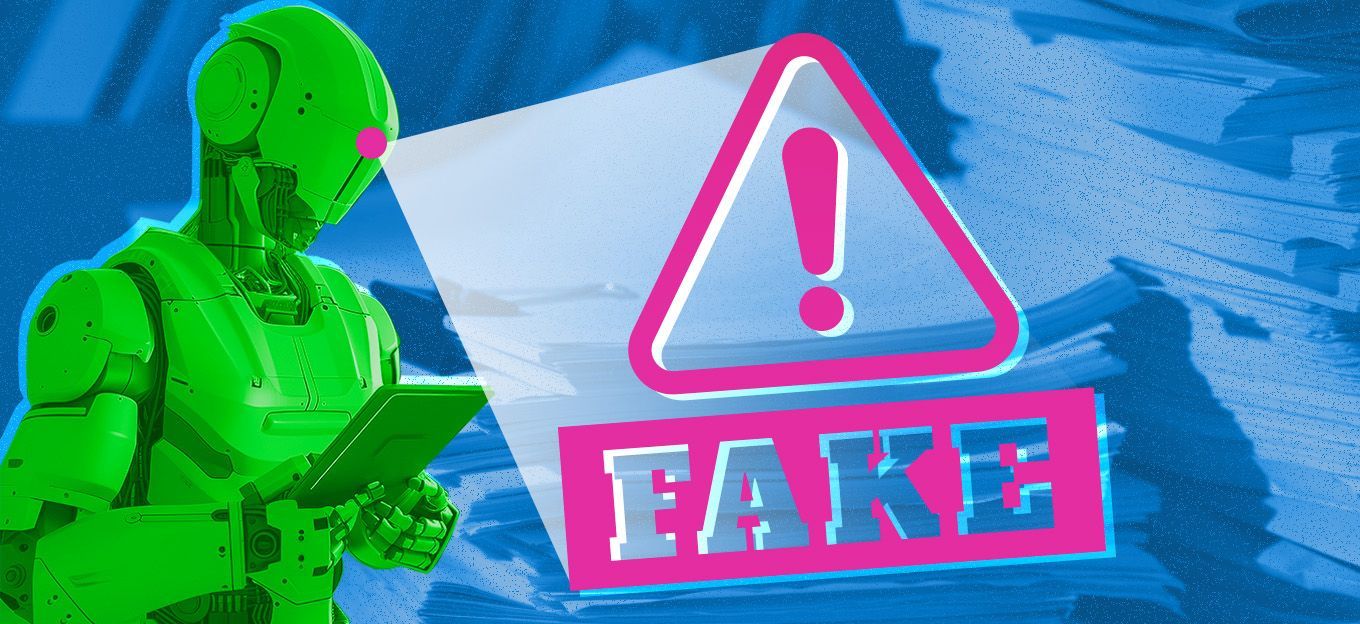
Concept image showing AI tools misidentifying human writing as artificial content
As artificial intelligence continues to reshape content creation, a parallel ecosystem has emerged—one that claims to detect AI-generated text. While this might sound like a necessary safeguard in an era of misinformation, recent findings suggest a troubling reality: many so-called AI detection tools are unreliable, and some may even be deliberately deceptive.
At their core, AI text detectors promise to distinguish between human-written and machine-generated content. In theory, they analyze linguistic patterns, sentence structures, and statistical probabilities. However, in practice, even the most advanced models struggle with accuracy. Language is inherently complex, and modern AI systems are designed to mimic human writing with increasing precision. This makes definitive detection extremely difficult.
The situation becomes more concerning with the rise of questionable tools that exploit this uncertainty. These platforms often produce false positives—labeling authentic, human-written content as AI-generated. The real issue lies not just in the inaccuracy, but in what follows: users are prompted to pay for services that “humanize” their text. This creates a monetization loop built on flawed or even fabricated analysis.
From a technical standpoint, many of these tools lack transparency. Unlike robust machine learning systems that disclose model limitations and training methodologies, fraudulent detectors operate as black boxes. Some even function offline, raising serious doubts about whether any real analysis is being performed. In such cases, outputs may be pre-scripted rather than derived from actual computational models.
This trend introduces a dangerous dynamic in the broader information ecosystem. False AI detection results can be weaponized to discredit legitimate content. Journalists, researchers, and students may find their work unjustly labeled as artificial, damaging credibility and trust. In politically sensitive environments, this can escalate into deliberate disinformation tactics, where authentic documents are dismissed as AI-generated fabrications.
This phenomenon aligns with what researchers call the “liar’s dividend.” As AI-generated content becomes more prevalent, it becomes easier for bad actors to deny the authenticity of real evidence. Fake detectors amplify this effect by providing seemingly “technical” proof to support false claims.
Even legitimate institutions acknowledge the limitations of AI detection. Current models cannot guarantee accuracy, especially when dealing with high-quality human writing or advanced AI outputs. Detection systems often rely on probabilistic scoring rather than definitive classification, meaning results should always be interpreted with caution.
So what’s the practical takeaway for developers, writers, and tech professionals?
First, skepticism is essential. Treat AI detection results as signals—not proof. Second, prioritize tools that are transparent about their methodologies and limitations. Third, rely on multi-layered verification strategies, including metadata analysis, source validation, and contextual review.
For developers in particular, this trend highlights an important responsibility: building trustworthy AI systems isn’t just about performance—it’s about integrity. As AI continues to evolve, the tools surrounding it must be held to equally high standards.
Ultimately, the rise of fake AI detectors underscores a broader challenge in the digital age: not just identifying what is real, but understanding who benefits from telling us what isn’t.
Related Articles

Cosmic Byte Drakon Review – The Ultimate Tri-Mode Gaming Controller Under ₹5,000?
Discover the Cosmic Byte Drakon gaming controller with tri-mode connectivity, TMR joysticks, mechanical buttons, and pro-level customization. Full review, features, and performance breakdown.

MacBook Buying Guide 2026: Neo vs Air vs Pro – Which One Should You Buy?
MacBook Buying Guide 2026: Neo vs Air vs Pro – Which One Should You Buy?

Govt Unveils New Housing Loan Plan to Own a House for Just Rs. 16,500 Per Month
Govt Unveils New Housing Loan Plan to Own a House for Just Rs. 16,500 Per Month